Water pump: 5 situations when you will appreciate it
A heavy downpour can flood a basement, a trench, and even part of a garden in a few hours. In such moments, the speed of intervention and the right choice of equipment are crucial. A water pump helps not only to eliminate the consequences of rain, but also to drain a pool, pump water from a well, or irrigate a plot. In the article, you will learn what types of pumps exist, how to choose the right power, and when it is worth renting.
When do you need a water pump?
Not all situations can be solved with a bucket or a garden hose. If water builds up faster than you can drain it, a water pump comes into play.
It is most often used for draining basements after heavy rains, draining construction pits, draining garden ponds or maintaining swimming pools. In many households, it also plays an important role in supplying domestic water.
The use of a submersible pump in the home and garden is very wide today. It helps in pumping water from a well, pumping tanks and irrigating the garden with water from a well. Thanks to this, you can reduce drinking water consumption and at the same time effectively manage rainwater or groundwater.
The most common scenarios in which the intervention of pumping equipment is necessary:
• Emergency water leak from the water supply or heating system in the building
• Flooding of basements due to overflowing sewers or rising groundwater
• Retention of rainwater in construction pits, foundation strips and shafts
• Draining swimming pools, garden tanks or overflowing septic tanks
• Drainage of flooded lands and agricultural areas
Speed and reliability are crucial in construction
Pumps are an essential piece of equipment for many construction projects. Foundation excavations, sewer trenches, and installation of utility networks are often interrupted by rain or high groundwater levels.
If water builds up in an excavation, construction work can be halted for hours or days. Professional submersible pumps with a flow rate of up to 999 liters per minute can resolve the situation much faster than smaller hobby devices.
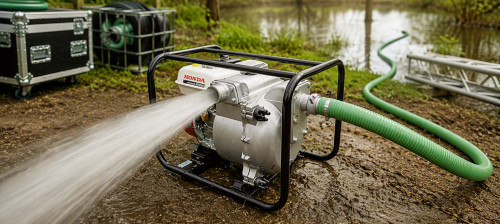
In more demanding conditions, a gasoline water pump is used. Its advantage is its independence from the electrical grid. You will appreciate this on new construction sites where an electrical connection has not yet been built, or during interventions after floods.
Some professional models available for rent have a capacity of over 1,000 liters per minute and can handle water containing sludge or small solid impurities. Thanks to their robust construction, they are ready for everyday use in demanding environments.
Pumping out water from the pool before winter: a job that takes a few dozen minutes
Regular pool maintenance doesn't end with the last swim. Before winter, it's necessary to lower or completely drain the water level according to the pool manufacturer's recommendations. Many owners are faced with the question of how to drain the water quickly and without unnecessary effort.
This is where a submersible water pump comes in. Simply place it on the bottom of the pool, connect a hose and drain the water to a suitable location. For smaller pools, this process takes a few dozen minutes, while for larger family pools it can take several hours, depending on the volume of water and the pump's power.
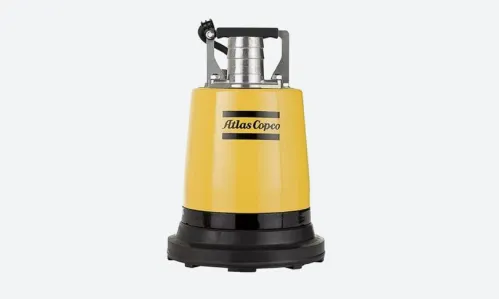
A great advantage are pumps designed for low levels. They can pump out the water almost completely and leave only a minimal layer. Some professional models can work down to a residual level of approximately 1 mm, which significantly reduces the amount of manual cleaning.
When draining your pool, it is a good idea to check in advance where the water will be drained. In the case of pool chemicals, it is not always possible to drain the water directly onto the lawn or into the storm drain. The correct procedure will help you avoid damage to the property and problems with handling larger volumes of water.
Pumping water from a well and watering the garden
Rising water prices are leading more and more households to use their own water sources. Pumping water from a well has become a common solution not only in rural areas but also in newer single-family homes. Environmentally-minded gardeners are increasingly using captured rainwater or groundwater reserves. Regularly watering the garden with water from a well saves hundreds of thousands of liters of tap water per year.
It is not necessary to use drinking water from the public water supply to irrigate lawns, trees or vegetable beds. A properly selected water pump will provide sufficient pressure and flow for automatic irrigation systems.
When watering the garden with water from a well, the distance between the well and the point of collection plays an important role. If the water is pumped over a longer distance or to a higher part of the plot, it is necessary to monitor the pump pressure. This is what determines whether the system will function reliably even during hot summer days.
Larger gardens, measuring several hundred square meters, often require more powerful equipment. Conversely, for a smaller plot of land, a compact submersible pump placed directly in a well or retention tank may be sufficient.
What types of pumps are there?
Imagine finding a few inches of water in your basement after a weekend storm. Electronics and stored items are at risk, and the water is still rising. In such a situation, a suitable submersible water pump can remove hundreds of liters in a short time and significantly limit the damage.
The choice depends mainly on what kind of water you need to pump, how large a volume you want to remove, and whether you have access to electricity.
Submersible water pump for cellars and shafts
For flooded basements and deep shafts, a submersible water pump is the most common choice. It works directly below the surface. It is suitable for pumping clean or slightly polluted water from wells, tanks, cellars or swimming pools.
Smaller models can handle a flow rate of approximately 225 to 499 liters per minute, while professional versions can pump more than 1,000 liters per minute. The advantage is easy installation and reliable operation.
A special category are low-level pumps. They can pump water practically dry, in some cases down to a residual level of approximately 1 mm. Therefore, they are often used to pump water out of a pool before winter.
Slurry pumps
Submersible models are divided into clean water pumps and robust sludge pumps.
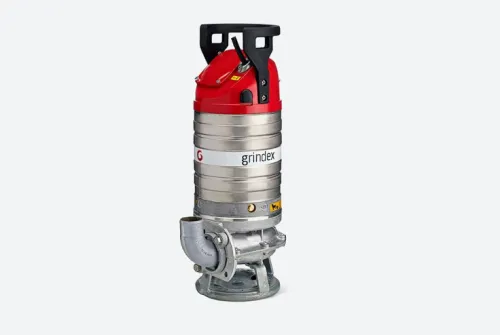
A sump pump has wider passage channels in the impeller and often a cutting mechanism. It can easily suck up debris, leaves and clay pieces up to 30 to 50 millimeters in diameter. If you need to quickly pump out a basement full of mud, a regular garden pump will fail after a few minutes due to blockage.
Self-priming pumps
Self-priming pumps remain out of the water and draw liquid through a suction line. They are often used in irrigation systems or for regular pumping of water from wells.
They are particularly suitable where long-term and repeated water withdrawal is required.
Gasoline water pump without dependence on electricity
Power outages accompany almost every major storm or flood. In addition, the sockets in a flooded basement are inoperative or disconnected for safety reasons. In such cases, a gasoline water pump equipped with an internal combustion engine comes into play.
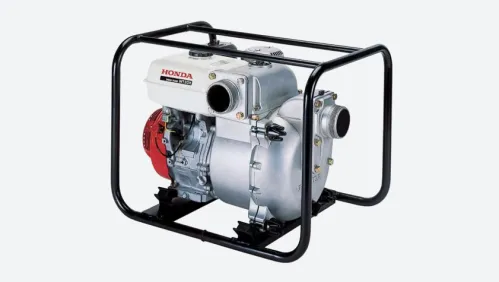
These power packs deliver extreme water flow and are designed for continuous use on remote construction sites or in the field. They are used on the surface and draw water in via a rigid suction hose with a non-return valve. They are ideal where massive power is required without an available electrical connection.
Professional gasoline pumps have a capacity of approximately 1,200 liters per minute and are used in floods, on construction sites, or in agriculture.
How to choose the right pump power?
Many people focus only on price when choosing a bike. However, the parameters that will affect real-world performance in the field are much more important.
Above all, monitor the flow rate, i.e. the amount of water pumped per minute. For a smaller cellar, a lower output will suffice, while flooded excavations or larger tanks require an output of hundreds to thousands of liters per minute.
The delivery height, called the discharge, is also important. It indicates how high the pump can deliver water. Common submersible models can handle approximately 11 to 14 meters, more powerful professional devices more than 20 meters.
When it comes to how to pump water most efficiently, consider the type of liquid. Clean water, rainwater, and muddy water with impurities all require different technical solutions. The wrong choice can lead to reduced performance or damage to the device.
Which pump to choose according to a specific situation?
| Situation | Recommended pump type | What to watch out for | Typical performance |
| Flooded basement after rain | Submersible pump for clean water | Headroom and electricity availability | 225 to 499 l/min |
| Draining the pool before winter | Low level submersible pump | Ability to pump water almost dry | approximately 225 l/min |
| Pumping water from a well | Submersible or self-priming pump | Source depth and water transport distance | by depth and system |
| Watering a larger garden | Self-priming pump | Stable flow rate during extended operation | individually according to irrigation |
| Construction excavation with mud | Submersible slurry pump | Size of solid particles in water | up to 999 l/min |
| Floods and heavily polluted water | Gasoline slurry pump | The need for mobility without an electric grid | up to 1,200 l/min |
| Remote workplace drainage | Gasoline water pump | Tank capacity and fuel availability | 1,000 l/min and more |
Flow, displacement and pumping depth: three key parameters that make the difference
Many users base their choices solely on motor power, but the wattage or kilowatt rating alone doesn't tell you everything about how a device will perform in specific conditions.
The first important parameter is the flow rate. It indicates how many liters of water the pump can pump per minute. For smaller flooded areas, a capacity of approximately 225 to 500 liters per minute may be sufficient. On larger construction sites or when eliminating the consequences of floods, devices with a capacity exceeding 1,000 liters per minute are used.
Equally important is the head. In layman's terms, this is the maximum height to which the pump can deliver water. If the water is being pumped only a few meters from the pumping point, a lower head will suffice. When pumping water from construction pits or deeper excavations, a head of more than 20 meters may be required.
The third area is the nature of the water being pumped. Clean rainwater places less demand on the technology than water containing mud, sand or small stones. In this case, a submersible water pump designed for turbid environments or a professional gasoline-powered slurry pump is more suitable.
Safety when using pumps
Although pumps are relatively easy to use, safety rules should not be underestimated.
Always check the condition of power cables, hoses and connections before starting. For electric models, be careful when working in damp environments and use only functional and undamaged accessories.
For slurry and petrol pumps, ensure sufficient ventilation and a stable location for the equipment. The pump should never run dry, i.e. without water, as this can cause overheating and damage to the motor.
If you are unsure about the selection or proper use, seek professional advice. Properly setting up the equipment is often the difference between a few hours of work and several days of work.
The most common mistakes when using pumps
Even high-quality technology can work inefficiently if used incorrectly.
The most common problems arise from undersized performance, incorrectly selected pump type or when using equipment designed for clean water in a heavily polluted environment. A common mistake is also a hose that is too long or improperly routed, which reduces the performance of the entire system.
When renting professional equipment, you gain the advantage that experts will recommend the right model for your specific situation. This will help you avoid downtime, unnecessary costs, and the risk of damage to your equipment.
Pump rental through Ramirent – how it works
The need to pump out water often arises unexpectedly. This is why in many cases it makes more sense to rent rather than buy equipment that you will only use a few times a year.
There are various types of pumps available for both clean and dirty water, from compact low-level models to powerful professional devices designed for construction sites or flood relief.
The rental includes professional instruction on operation, technically prepared equipment and service during the rental period. If necessary,transportation of the equipment can also be arranged.
The advantage is the flexible rental period and a wide network of branches throughout Slovakia. Reservations are easy and the choice of equipment can be adapted to the specific conditions of your building, garden or house.
Frequently asked questions
It is best to use a submersible water pump, which is placed directly in the flooded area. The choice depends on the amount of water and whether it contains impurities. For turbid water, choose a sludge pump.
A submersible pump designed for low levels is often used for this purpose. It can remove most of the water and make winterizing the pool much easier.
Yes. Petrol pumps operate independently of the mains, making them popular on construction sites, in agriculture or for flood relief. They can also handle dirty water and sludge.