Aerial Work Platforms: 6 Off-Site Uses
At first glance, they seem to belong in construction. But today, aerial platforms are also working where you wouldn't expect them - above a stage, in a production hall, or on the roof of a shopping center.

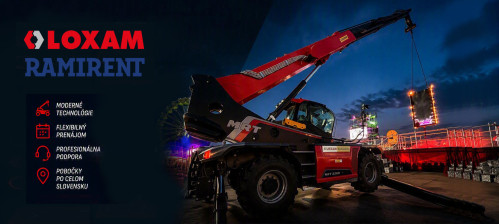
Because one working day can decide whether the lighting installation is completed before the festival opens or whether the production hall resumes operations on time. It is in situations like these that high-lift platforms show their true value. They are not just a technology for construction workers – they are used in dozens of different industries. See how they can save you time, simplify your work and increase safety.
Why platforms aren't just for construction
Many still associate aerial platforms exclusively with the construction industry. The reality is broader. It is a universal device that allows safe movement at height without complicated scaffolding or ladders.
The main difference is the speed of deployment. While scaffolding takes hours to erect, the platform is ready for work within minutes. For short-term tasks or smaller projects, this is a significant time and cost saving. Instead of several hours of preparation, you can start working almost immediately, which will be appreciated by companies with short-term contracts and organizers of one-off events.
It is this flexibility that has opened the doors for platforms to completely different sectors – from culture to logistics.
Festivals, events and cultural events
Organizing an event without working at height is practically impossible today. High-lift platforms play a key role in the assembly of structures and equipment.
At festivals they are mainly used for:
- installation of lighting at heights of 10–20 meters
- installation of sound systems and LED screens
- fixing decorations or advertising banners
- inspection of structures before the opening of the event
A typical solution is an articulated platform that can "bend" and reach above the stage without interfering with the space below it.
Imagine the situation: a technical team is preparing for an evening concert and needs to adjust a spotlight 15 meters high, directly overhead. Without a platform, it would be necessary to dismantle part of the structure. With a platform, the technician can get exactly where he needs to be in a matter of minutes.
Safety is essential in this type of work. A stable platform with a protective basket - this can also support multiple workers and equipment, often around 200 kg or more, which significantly reduces the risk of falling compared to improvised solutions.
Industrial halls, warehouses and logistics centers
In manufacturing plants and warehouses, work at height is repeated almost daily. He regularly performs maintenance on air conditioning, lighting, and technological distribution systems.
The most common type of platform here is a scissor lift – the type that lifts vertically upwards. It is stable and suitable for flat floors, which makes it ideal for halls.
Specific use:
- replacement of luminaires at a height of 8–12 meters
- service of air conditioning units, camera systems
- inspection of racking systems, fire protection equipment
- installation of cable routes
There can be up to 200 light points in a medium-sized hall. Replacing them using a ladder would take several days. With a platform, the team can handle the work in one work shift. Even if it is necessary to work at height during a production stop, every hour counts.
Proper planning of movement is also important, especially in busy operations. The operator must take into account the movement of employees and equipment to ensure smooth and safe work.
The scissor lift is the most commonly used. It moves vertically upwards, which ensures stability. Modern models can handle even difficult terrain and can carry significantly more – up to 750 kg, which means that more people can work on the platform at the same time.
Real-world situation: dozens of lights need to be replaced in a production hall at a height of 12 meters. With a ladder, the job would take several days. The platform allows for movement around the hall and completion during one shift.
Additionally, electric variants have low noise and zero emissions, making them ideal for interiors.
Facades, roofs and building maintenance without time-consuming scaffolding installation
Building managers and technical services use platforms regularly today. The reason is simple: work at height is repetitive and often short-term.
This includes, for example:
- cleaning of facades and glass surfaces
- roof element repairs
- installation of advertisements on buildings
- tree trimming around the property
Here again, the articulated platform is used, which allows you to get around obstacles such as balconies or ledges. Thanks to the 4x4 drive, it can also handle difficult terrain around the building. For flat areas and easier access, a scissor platform is also sufficient.
Modern machines today allow you to work at heights of up to 41.5 meters, with the work basket able to carry approximately 230 kg . For lower work at heights of around 18 meters, some scissor platforms can offer a lifting capacity of up to 750 kg , which greatly facilitates assembly work.
Imagine a shopping mall manager who needs to inspect the gutters on a roof 12 meters high. Time is limited, traffic is moving. A platform allows intervention without closing the entire area.
When working on facades, the following principle applies: always check the load-bearing capacity of the substrate and the stability of the equipment. Even minor negligence can lead to a dangerous situation.
How to choose the right type according to the purpose
Not every platform is suitable for every task. The difference between types is mainly in the way they move and reach.
Basic approximate division:
- scissor lift – vertical upward movement, ideal for interiors
- articulated platform – flexible arm, suitable for uneven areas
- telescopic platform – large horizontal reach, suitable for construction sites
When considering renting a work platform, first think about your specific situation: where you will be working, what the height is, and whether you need to get around obstacles. For example, a platform with a working height of 18 meters and an extendable basket will provide enough space for two workers and their tools.
Choosing the right type can shorten the implementation time by tens of percent. The wrong choice, on the other hand, means delays and increased costs.
Rental of forklifts through Ramirent – how it works
If you don't need the platform daily, renting is the most practical option. You will save on maintenance, storage and service costs.
The rental price usually includes:
- professional handover of equipment with operating instructions
- service and technical support during use
- possibilityof transport directly to the place of implementation
Another advantage is flexibility. You can rent the platform for a day, a week, or a long-term period depending on the needs of the project.
Ramirent has a network of branches across Slovakia, so equipment is available without a long wait. Reservations are simple and adapted to the pace of construction and industrial projects.
Frequently asked questions
Yes. It is often used in the organization of festivals, in manufacturing plants, logistics centers, in building maintenance, in the installation of advertising, lighting or technological equipment.
A scissor lift moves straight up and is stable on a flat surface, making it particularly suitable for indoor use. An articulated lift has an arm that bends and allows access to the sides and over obstacles, making it suitable for more complex installations and maintenance.
For most companies, yes. Leasing eliminates the worries of servicing, storage, and a high initial investment. At the same time, you get the equipment exactly when you need it.